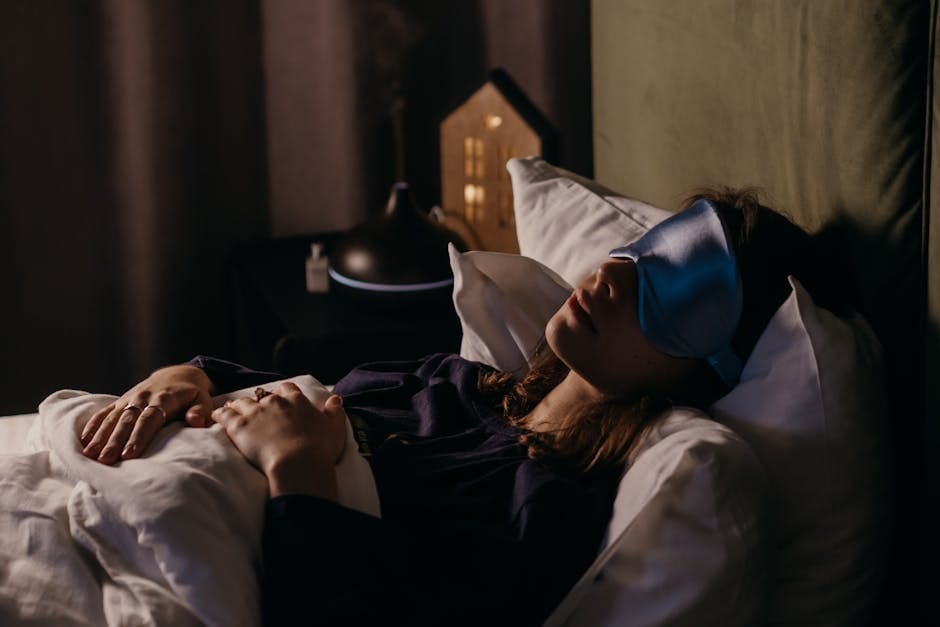
Sleep hygiene advice usually starts and ends with 'no screens an hour before bed'. That helps slightly but ignores the bigger drivers of women's sleep problems: temperature, hormone fluctuations, and the racing mind that doesn't switch off because the day didn't end at 9pm.
The temperature problem
Sleep onset requires a core temperature drop of 1-2°C. Bedrooms above 19°C interfere. Perimenopausal hot flashes wake women repeatedly, fragmenting sleep without conscious awareness.
Solutions: bedroom set to 17-18°C overnight (UK summer requires fans or AC). Cooling mattress topper (Slumber Cloud, Eight Sleep if budget allows). Cooling pyjamas (Cool-jams or bamboo viscose). Cold shower before bed paradoxically helps by triggering compensatory cooling.
The racing mind problem
Anxiety doesn't switch off at 11pm because the workday ended at 6. Cortisol stays elevated, and the lying-in-bed time becomes prime worry time.
Solutions: scheduled 'worry time' earlier in the evening (15 minutes, write down everything anxious, then close the notebook). Cognitive shuffling (a specific technique developed by Luc Beaudoin) — works for many people who can't switch off mentally. Magnesium glycinate (300-400mg before bed) for anxiety-driven insomnia, with reasonable evidence.
The hormonal fluctuation problem
Sleep quality drops in the luteal phase (week before period). Drops further in perimenopause. Most generic 'eight hours' advice doesn't account for monthly or life-stage variation.
Solutions: track sleep against cycle phase (Oura ring, Garmin, or simple journal). Accept that you'll need more rest in luteal week and plan around it. For perimenopause, HRT discussion with GP if sleep is significantly disrupted — sleep is one of the most validated benefits of MHT.
What to skip
Sleep tracking apps that grade your sleep with a score (creates anxiety about sleep, paradoxically worsening it). Sleeping pills as a long-term solution (tolerance, dependency, and don't address underlying causes). Alcohol as a sleep aid (knocks you out, fragments quality sleep, increases overnight waking).
Generic sleep hygiene gives you 10% of possible improvement. Tailoring to your specific drivers (temperature, anxiety, hormones, shift work) gives you the rest.