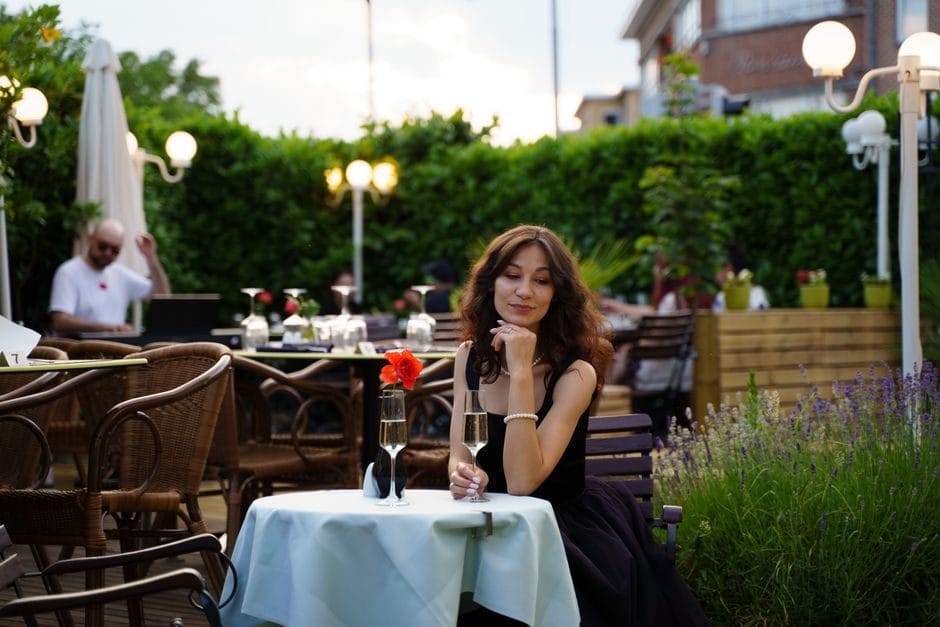
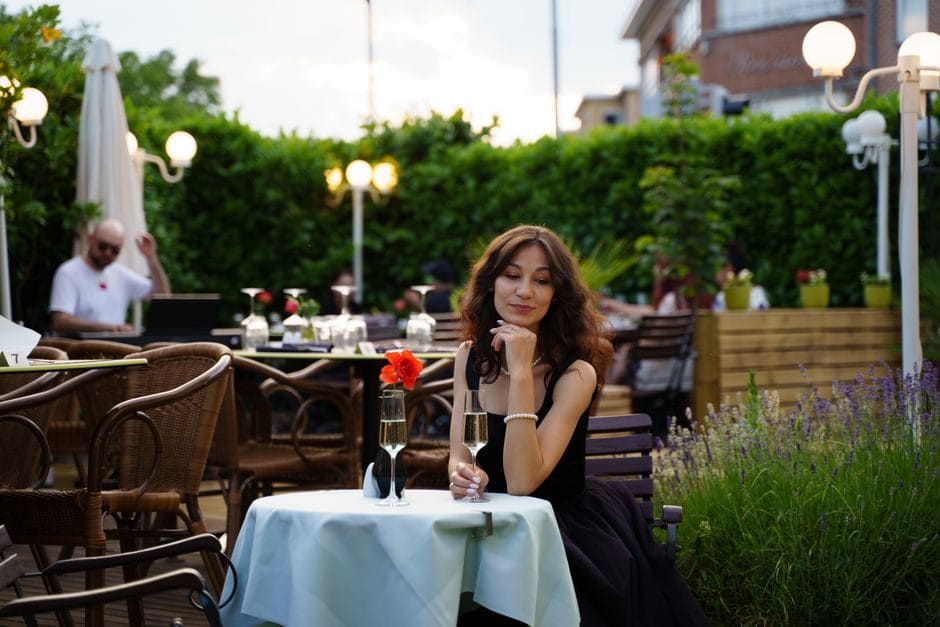
The kids are off, the deadline cleared, the long light stretches the day past nine — and instead of relief there's a faint, fidgety unease, the sense that you should be making more of this. If that's familiar, you're not ungrateful and nothing is wrong with you. The empty evening is just harder to hold than a full one, and almost nobody warns you about that.
Structure was doing more work than you noticed
A busy schedule is exhausting, but it's also a set of rails. It tells you what to want next, when to stop, what counts as a good day. Take the rails away — which is exactly what a slow July evening does — and the mind goes looking for the next instruction and finds nothing. So it manufactures one: scroll, tidy, half-plan a trip, check work email "just quickly." The restlessness isn't a sign you need more to do. It's the sound of a system that was running on external prompts suddenly being asked to choose for itself.
Psychologists have a tidy name for part of this, the way unstructured time can leave us more anxious rather than less, and it shows up sharply in people who've spent years optimising every hour. If your whole adult life has rewarded productivity, genuine downtime can register almost as a threat, because there's no metric to win at. You sit on the patio with a cold drink and some part of your brain keeps asking what you're achieving. The honest answer — nothing, that's the entire point — is the one it's least equipped to accept.
The small trap of treating leisure as a project
Here's where many of us go wrong, myself included. We feel the unease and respond by organising the relaxation: a reading challenge for the summer, a list of fourteen recipes to try, a spreadsheet for the staycation. We turn rest into another task with a completion bar, and then wonder why a fortnight of "doing nothing" left us as wrung out as a fortnight of work.
An evening you can't account for is not a wasted evening. It's the only kind that actually refills the tank.
I'm not going to pretend this is easy, or that there's a five-minute fix. There isn't. But a few things genuinely loosen the grip, and they're small enough to try tonight:
- Pick one low-stakes thing with no outcome — watering the pots, lying on the grass, watching the swifts work the sky at dusk — and do only that, no podcast layered on top.
- Leave the phone in another room for the first hour of the evening, not as a digital-detox virtue project, but because the device is where the "do more" prompts live.
- Name the discomfort out loud when it comes: "this is just my brain missing its instructions." Naming it shrinks it, most nights.
The third one sounds too simple to work. It mostly does anyway.
It helps to know this isn't a personal failing or a sign of a restless temperament. The same people who struggle most with a free Saturday are often the ones who are excellent in a crisis, brilliant under a deadline, the friend everyone calls when there's a problem to solve. That competence is real, and it's exactly what makes the empty hour feel like a held breath — there's no problem in front of you, and the muscle that wants one keeps flexing at the air. Treating the evening as a problem to be solved is the one move that guarantees it stays uncomfortable.
The flatness is information, not a verdict
There's a flip side worth being honest about. Sometimes the strange empty feeling on a free evening isn't restlessness at all — it's the first quiet moment in months, and in the quiet you finally notice you're running low, or sad about something you've been outrunning. That's not the evening's fault, and more activity won't touch it. For that, the answer is usually the opposite of a plan: a slow walk, an early night, or saying the thing out loud to someone who'll just listen.
So if the long July evenings feel oddly unsettling rather than blissful, treat it as a skill you're rusty at rather than a flaw. The capacity to sit in unstructured time, wanting nothing in particular, is something most of us trained out of ourselves somewhere around our first proper job. It comes back. Tonight, water the pots and watch the light go. That's allowed to be the whole evening.