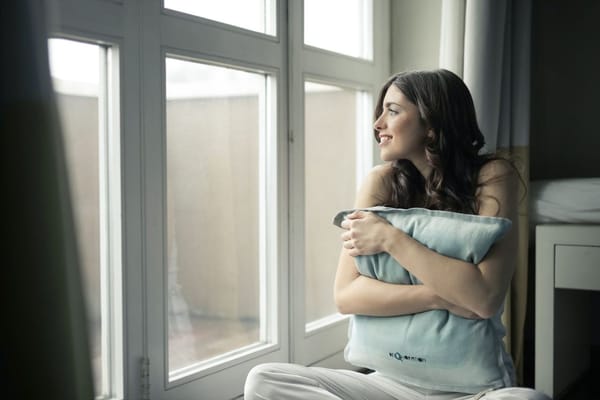
Why You Should Have a Calm Place at Home
Most homes don't have dedicated calm space. Bedroom is for sleep, living room for entertainment, kitchen for cooking.
An accessible resource on mental health for women—free of stigma and jargon, with real, practical tools. The content was developed in collaboration with psychologists and psychotherapists. The focus is on managing everyday stress, relationships, burnout, anxiety, and self-esteem. It is not a substitute for therapy, but it helps you understand when you need it.Thoughts, stories and ideas.
Most homes don't have dedicated calm space. Bedroom is for sleep, living room for entertainment, kitchen for cooking.
Daily news consumption — morning news, news during commute, news before bed — produces anxiety, helplessness, and minimal actionable information. Weekly summary
Most modern adults live in their heads all day — thinking, planning, worrying — while body's signals (tension, hunger, fatigue,
Many women apologise for things that aren't their fault — bumping into someone in a shop, being given wrong
Constant self-monitoring to be 'a good person' produces moral exhaustion. The identity work isn't what matters;
Sit-down dinner — at a table, with proper plate, present with food — is more nourishing psychologically than eating in front of
Most weekends fill with plans, social commitments, household tasks. A monthly weekend deliberately scheduled with no plans (or minimal) restores
Productivity culture suggests every hour should produce output. The reality: brain needs unstructured time, daydreaming, and 'doing nothing'
Most adults engage with mental health only during crisis. Preventive care — therapy, lifestyle, support systems — is cheaper, easier, and more
Most adults have 50-200 casual acquaintances and may know hundreds more by name. The inner circle of 3-5 deep relationships
Crying is biological release — emotional tears contain stress hormones being eliminated, parasympathetic activation, oxytocin release. Adult life often suppresses crying
Daily outdoor time — even 15-30 minutes — produces measurable improvements in mood, sleep quality, vitamin D synthesis, and circadian rhythm regulation.